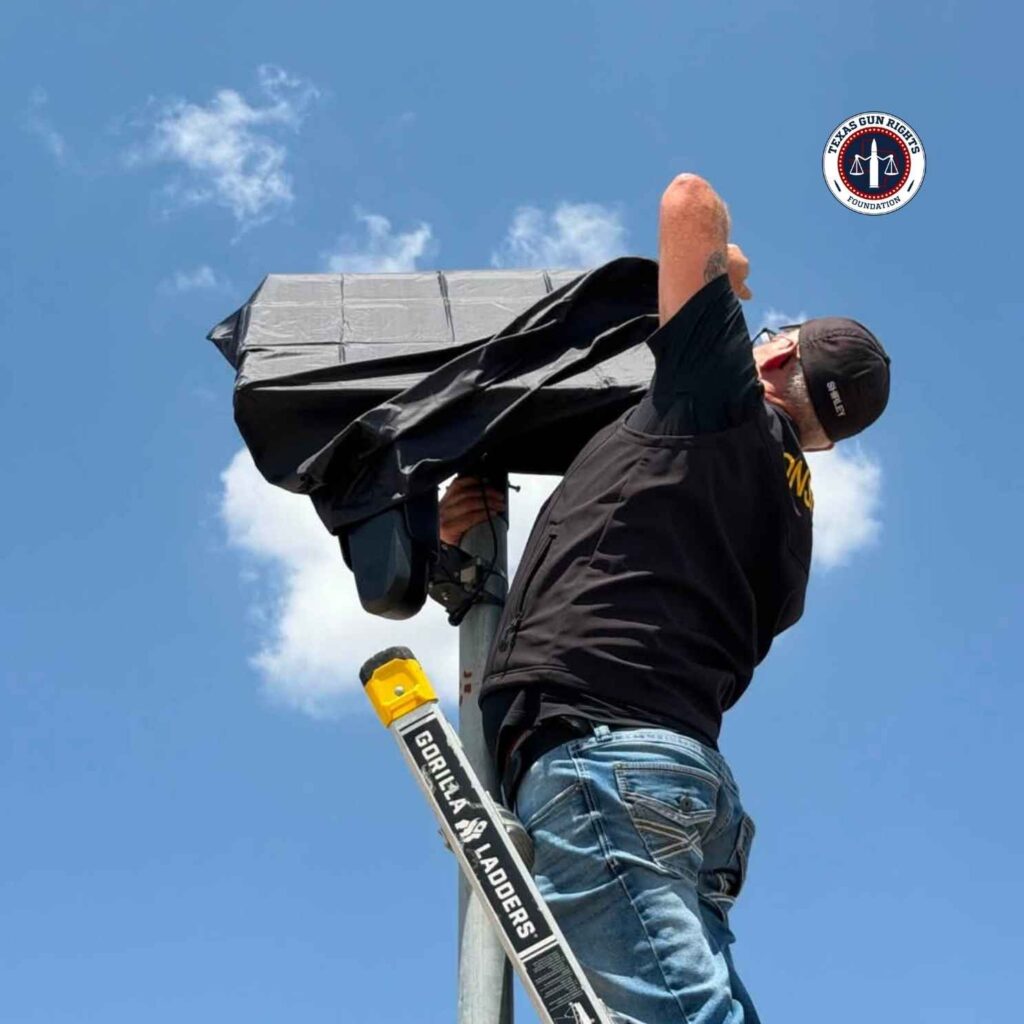
Texas Gun Rights is calling on Texas lawmakers to ban government use of Flock-style automated license plate readers before mass surveillance becomes a permanent feature of life in the Lone Star State.
Tempe, Arizona, just pulled the plug.
The city announced it was shutting down its Flock Safety automated license plate reader network and terminating its contract with the company. Officials also said they would not replace Flock with another system.
Tempe Mayor Corey Woods acknowledged the cameras had been useful to police but said the danger outweighed the benefit.
“But the risk of misuse is too great,” Woods said.
Texas lawmakers should pay attention.
This isn’t simply about cameras. It’s about whether government should be able to build a searchable database of where ordinary citizens travel — including trips to gun stores, shooting ranges, gun shows, and political events.
For Texas Gun Rights, the answer is simple: Texas should ban warrantless mass surveillance.
Collect First. Search Later.
Flock cameras don’t only monitor criminal suspects.
They scan ordinary motorists, recording license plates, vehicle characteristics, locations, and times. That information can then become searchable by law enforcement.
Instead of identifying a suspect and conducting surveillance based on evidence, this technology flips the model:
Collect information on everybody first. Search it later.
For gun owners, the danger should be obvious.
Government doesn’t need a database of firearm serial numbers to learn something about gun owners. A searchable history showing vehicles repeatedly visiting gun stores, ranges, gun shows, or Second Amendment events can reveal plenty.
“Texans should not have to wonder whether the government is creating a searchable record every time they drive to a gun store, shooting range, or gun show,” said Texas Gun Rights President Chris McNutt. “Being on a public road is not probable cause, and exercising your Second Amendment rights should never put you in a government surveillance database.”
The Threat of Abuse Is Real
Texas already has warning signs.
A former Katy police officer has been charged with felony stalking and misuse of official information after authorities alleged he used Flock cameras as part of an effort to track his ex-wife. Those charges remain pending.
Meanwhile, Texas communities are beginning to push back.
Pflugerville’s City Council voted unanimously to terminate its relationship with Flock and deactivate 28 cameras amid concerns over outside access to the city’s data.
Kendall County commissioners also voted unanimously not to renew the county’s Flock contract.
The surveillance fight isn’t coming someday.
It’s already here.
Being on a Public Road Is Not Probable Cause
Supporters argue license plate readers help police locate stolen vehicles and criminal suspects.
But making an investigation easier does not erase constitutional protections.
When police have probable cause, they can seek a warrant.
What Texas should reject is indiscriminately collecting the movements of law-abiding citizens so government agencies can search those records later.
Lawmakers considered restrictions during the 89th Legislature, including House Bills 961 and 2083.
Next session, they should go further.
Texas should prohibit state and local government participation in mass automated license plate surveillance networks and prevent agencies from circumventing those protections through private vendors or outside government partners.
Driving to a gun store is not probable cause.
Going to the range is not probable cause.
Attending a gun show is not probable cause.
And exercising your Second Amendment rights is certainly not probable cause.
Tempe pulled the plug. Texas communities are pushing back.
Now Texas lawmakers should finish the job statewide.
Chip in today to help Texas Gun Rights fight to ensure Texans don’t have to surrender their privacy to exercise their right to keep and bear arms.