Texas Gun Rights is helping a member pursue federal firearm rights restoration while fighting for state legislative reform. The rush for 5,000 federal intake slots shows how many Americans are still waiting for a meaningful path back.
The Justice Department’s firearm rights restoration portal reached its initial limit of 5,000 applicants on November 4, the same day public access opened, according to DOJ’s application page.
For thousands of Americans seeking to reclaim their Second Amendment rights, the opportunity was long overdue. By the end of that first day, the door was closed to new applicants.
For Texas Gun Rights member David Hart, that fight is personal.
Hart rebuilt his life after a decades-old nonviolent conviction, served his community, and sought a Texas pardon. His effort stopped at the Texas Board of Pardons and Paroles.
Now he is pursuing federal firearm rights restoration with help from TXGR attorney CJ Grisham. At the same time, Texas Gun Rights is fighting for state legislation so nonviolent Texans have a meaningful path to reclaim their rights.
The federal process is an opening. It is not a substitute for fixing Texas law.
A Rebuilt Life. A Denied Pardon.
As Texas Gun Rights previously reported, Hart’s troubles followed devastating personal losses, homelessness, and addiction. A nonviolent drug possession conviction cost him more than his sentence. It left him fighting to recover his Second Amendment rights decades later.
Hart went on to build a business, serve as a firefighter, and join the Texas State Guard. His pardon campaign earned support from lawmakers and local officials across the state.
NBC 5 reported in May 2025 that more than two dozen state lawmakers supported the Parker County man’s effort. The report described a striking contradiction: Hart held certifications to train law enforcement but could not serve as a volunteer reserve peace officer because he could not legally carry a firearm.
Despite that record of rebuilding and service, the Board declined to recommend a pardon, according to TXGR’s previous reporting. In Texas, the Board must recommend a pardon before the Governor can grant one. Hart’s effort never cleared that hurdle.
But the denial did not end his fight.
Hart is now pursuing federal relief with Grisham’s assistance. He has not been granted restoration. His application and TXGR’s legislative effort address separate parts of a problem that neither Washington nor Austin can solve by pointing at the other.
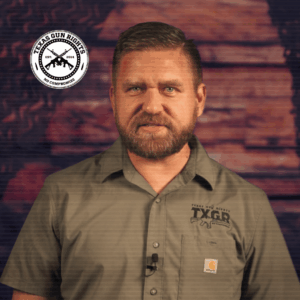
“David Hart rebuilt his life and served his community, but he is still fighting to reclaim his rights,” said Texas Gun Rights President Chris McNutt.
“TXGR is helping him pursue federal relief while fighting to change Texas law. A constitutional right should not become a lifetime privilege available only to people who can navigate the right bureaucracy.”
Intake Slots Are Not Restored Rights
DOJ’s portal is temporarily closed to new starts. People who already began applications can finish and submit them.
The department’s published schedule lists another intake window beginning January 4, 2027, initially limited to 500 additional applicants. After the first 5,000 slots filled in a single day, that limited reopening underscores how much demand remains.
Those numbers represent access to the application process, not restored rights. They do not mean every person who started has submitted a completed application, much less received approval.
Under 18 U.S.C. § 925(c), the Attorney General may grant relief from federal firearm disabilities after determining that an applicant is unlikely to endanger public safety and that relief would not be contrary to the public interest.
The process operates through DOJ’s Office of the Pardon Attorney, with applicants subject to individualized review. A federal grant does not erase a conviction or override independent state firearm restrictions.
That distinction matters for Texans. Opening a federal application process does not finish the job in Austin.
Texas Cannot Leave Restoration to Clemency Alone
Hart’s experience exposes the limitations of relying on pardons as the answer for every nonviolent Texan seeking restoration.
A person can complete his sentence, rebuild his life, serve his community, and earn substantial support from public officials, yet still emerge from the pardon process without relief.
Texas Gun Rights is fighting to change that.
During the 2025 legislative session, House Bill 2759 proposed narrowing Texas’ felony-based firearm-possession restrictions to specified categories of offenses rather than applying them to every felony conviction.
That is the distinction lawmakers must confront: a felony label alone does not tell the full story of a person’s offense, rehabilitation, or conduct decades later.
TXGR is making rights restoration for nonviolent felons part of its unfinished legislative agenda. Meaningful reform must provide a path for people with existing convictions, not leave Texans like Hart behind while promising relief to someone else someday.
Federally, DOJ must process applications and expand meaningful access rather than leave eligible Americans waiting for another limited intake window. In Texas, lawmakers must address state restrictions instead of treating a federal application as the answer to every case.
Hart is still fighting. Texas Gun Rights is fighting alongside him.
Washington has opened a door. Texas lawmakers must stop leaving their own barriers in place.
Chip in below to help Texas Gun Rights fight for meaningful gun rights restoration in Washington and Austin